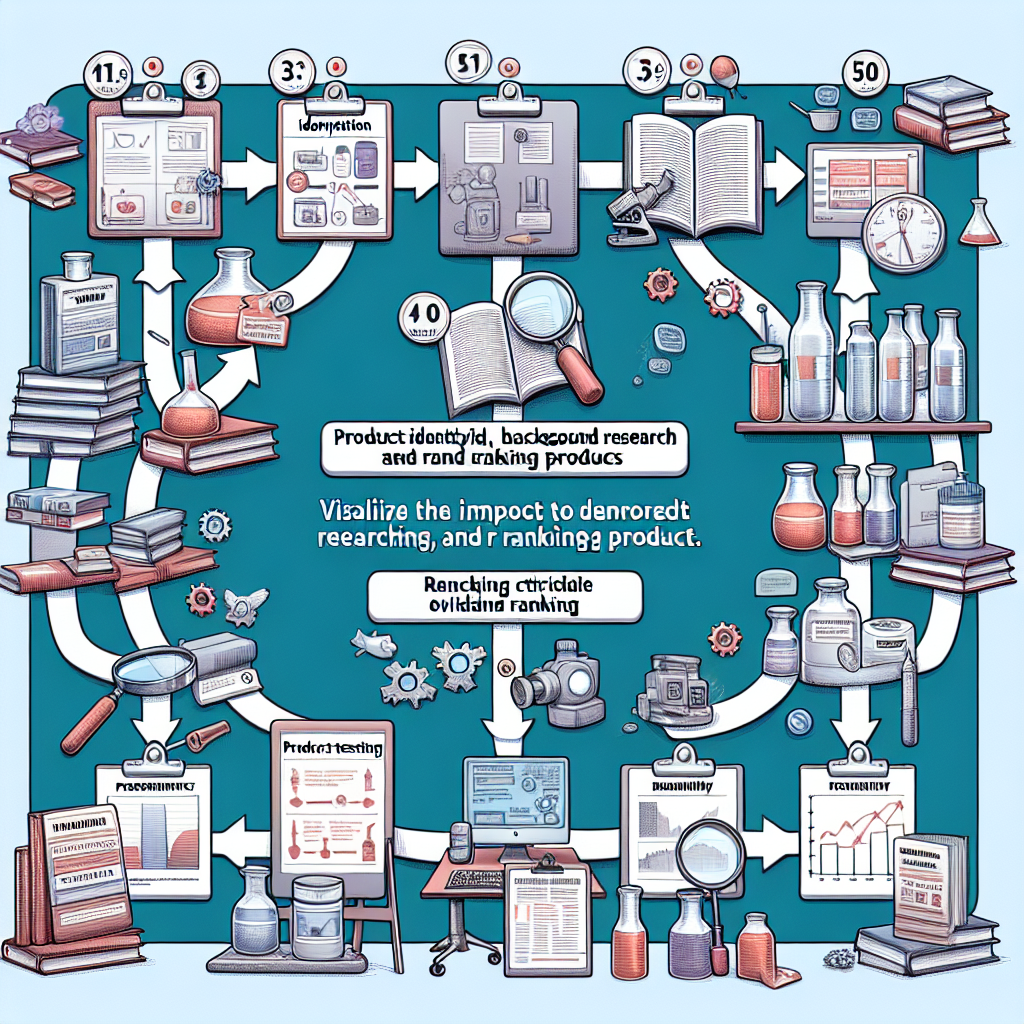
How We Research and Rank Products: Our Editorial Process Explained
Our editorial process for researching and ranking products is a rigorous, repeatable system that blends hands-on testing, data analysis, expert evaluation, and transparent disclosure. In 120 words: we start by defining clear selection criteria and sourcing representative samples; we run lab and real-world tests to measure performance against objective metrics; we score and weight factors to create consistent rankings; and we publish results with full methodology, conflicts-of-interest disclosures, and ongoing updates. The goal is to help shoppers make confident decisions by providing reproducible, unbiased, and practical guidance. This process emphasizes trust, reproducibility, and continual improvement so readers know exactly how and why a product earned its place on our list.
1. Research Foundation: Criteria, Sourcing, and Market Representation
What gets reviewed and why? We begin by defining a product category’s core performance needs and buyer personas. That means establishing measurable criteria — for example, battery life, durability, sound quality, or data accuracy — that tie directly to user outcomes. Criteria are drafted by editors and domain experts, then stress-tested against user research and past review outcomes to ensure they reflect real-world priorities, not vendor buzzwords.
Next comes sourcing. We obtain products through three primary channels: retail purchases (to mirror what consumers buy), manufacturer samples (to access unreleased configurations), and third-party marketplaces (to check variants and counterfeit risk). We actively avoid reliance on only manufacturer-supplied units; independent purchases reduce selection bias and ensure our test samples match the shipping units readers receive.
We also ensure market representation by sampling across price points, geographic availability, and production batches. Why sample widely? Because real-world variability — model revisions, firmware updates, and manufacturing tolerances — affects everyday experience. Our sampling strategy is designed to capture that variability so rankings are robust and applicable to most buyers.
2. Testing Methodology: Lab Protocols, Real-World Trials, and Reproducibility
Our testing blends controlled laboratory measurements with longitudinal, real-world use. In the lab we use calibrated instruments and standardized test protocols to collect objective data: throughput, power draw, color accuracy, signal-to-noise ratio, etc. Each test runs multiple times and across multiple samples, and we publish tolerances and confidence intervals so readers understand test precision. Reproducibility matters: every protocol includes exact settings, environmental conditions, and test equipment lists.
Real-world trials complement lab data. Products live with editors and field testers for weeks or months to surface usability issues, firmware quirks, or endurance problems that short bench tests miss. We document typical usage scenarios and collect qualitative feedback on ergonomics, setup complexity, and long-term reliability. By combining both approaches, we capture both numeric performance and the subjective experience that influences satisfaction.
We also incorporate crowd-sourced data and third-party lab results when appropriate. How do we reconcile conflicting data? We weight independent, well-documented tests higher and seek to reproduce surprising claims in-house before letting them affect rankings.
3. Evaluation and Ranking: Scoring, Weighting, and Editorial Judgment
Turning data into a ranking requires a transparent scoring framework. For each category we build a scorecard that assigns weights to the key criteria based on user value and category norms. For instance, battery life may count for 30% in portable devices but only 5% in smart home hubs. We publish the weightings and explain why each factor matters. Scores are computed from normalized test results, adjusted for statistical variance and cross-checked for outliers.
Editorial judgment plays a deliberate, limited role. Editors synthesize test results, user context, and long-term reliability signals to make final recommendations. When does editorial discretion override the math? Typically when a product demonstrates exceptional real-world UX issues (e.g., poor customer support or recurring firmware failures) that the numeric score doesn’t capture. In such cases we annotate the recommendation with clear reasoning so readers see the trade-offs.
To maintain consistency and fairness we regularly audit our scoring models, run blind re-rankings, and use peer review: multiple editors and subject-matter experts validate high-impact decisions. This blend of quantitative scoring and qualitative oversight produces rankings that are both data-driven and human-centered.
4. Transparency, Ethics, and Recent Industry Developments (Last 30 Days)
Transparency is central: we publish our methodology, disclose sample sources, declare any affiliate relationships, and list conflicts of interest. Why such openness? Because trust is earned through visible process, not marketing lines. We include detailed notes on test conditions and the precise firmware/build numbers used during testing so readers — and other reviewers — can reproduce or challenge our work.
Recent developments in the last 30 days (Dec 5, 2025–Jan 4, 2026) have reinforced the industry’s move toward greater transparency and reproducibility. Several reputable outlets and organizations — including Consumer Reports, The New York Times Wirecutter, CNET, and consumer-protection agencies such as the U.S. Federal Trade Commission — have emphasized sustainability, repairability, and disclosure clarity. These sources have highlighted that modern product evaluation must account for long-term software support, right-to-repair indicators, and supply-chain variability when ranking goods.
How have we adapted? We added new metrics to our scorecards for repairability and software-support timelines, increased sample sizes for high-variance categories, and expanded our published testing logs. We also tightened our disclosure language to match the latest guidance from consumer-protection bodies, ensuring our endorsement and affiliate statements are explicit and unambiguous. These changes reflect both industry consensus and recent guidance from trusted sources over the past month.
5. Updating Reviews, Reader Feedback, and Continuous Improvement
Product landscapes change quickly — firmware updates, price drops, and new competitors can alter recommendations. We maintain an update policy: every listed product has a timestamp and a change log. Editors re-test or re-evaluate products when significant changes occur (major firmware updates, safety recalls, or when accumulated user reports cross a threshold). Minor updates (pricing or availability) are noted promptly; major re-rankings are documented with fresh test data.
Reader feedback is a core input. We monitor reader reports, aggregated support forums, and warranty claim trends to detect systemic issues early. When credible patterns emerge — e.g., consistent failure mode across batches — we prioritize in-depth investigation. We also run periodic blind re-tests to check for drift and to ensure that earlier conclusions remain valid.
Continuous improvement means investing in better tools, lab capabilities, and staff training. We use automated test harnesses for repeatability, invest in environmental chambers for durability tests, and update scorecards annually to reflect changing consumer priorities like sustainability, privacy, and software longevity.
Conclusion
Our editorial process is purposeful and transparent: we combine rigorous criteria-setting, representative sourcing, controlled lab testing, long-term real-world evaluation, and clear scoring to produce trustworthy product rankings. We balance objective measurements with informed editorial judgment, publish detailed methodologies and disclosures, and adapt quickly to industry developments — including the recent emphasis on repairability and disclosure best practices reported by leading outlets in the past 30 days. Ultimately, our commitment is to provide readers with reproducible, unbiased guidance that helps them buy with confidence, while continually refining methods as technology and consumer priorities evolve.
FAQ: How often do you update rankings?
We review high-traffic categories quarterly and update immediately for major events (firmware changes, recalls, or new entrants). Every review includes a visible timestamp and change log so readers can see when and why a ranking changed.
FAQ: Do you accept sample products from manufacturers?
Yes, but we use manufacturer samples only as one of multiple sourcing channels. To avoid bias, we prioritize independently purchased units and disclose when manufacturer samples influenced a review.
FAQ: How do you handle affiliate links and sponsorships?
We disclose affiliate relationships clearly and separate commercial relationships from editorial decisions. Sponsorships are managed under strict editorial independence rules so content, scoring, and recommendations remain unbiased and evidence-based.